Fire Safety Solutions
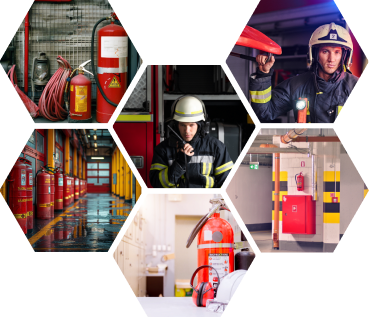
MCT Facilities Group provides fire safety solutions for commercial, industrial, office, and care buildings across Birmingham, Nottingham, Manchester, and the surrounding Midlands and North West England. Based in Burton-on-Trent since 2016, we run assessment, installation, testing, and maintenance as one connected service across detection and warning systems, suppression systems, and passive fire safety, backed by CHAS and Constructionline accreditation.
Key Takeaways
- One connected fire safety service: assess, remediate, install, test, certify, and maintain, rather than separate jobs with separate providers.
- Based in Burton-on-Trent since 2016, with regional coverage across Birmingham and the West Midlands, Nottingham and the East Midlands, and Manchester and the North West.
- Fire safety solutions covering detection and warning systems, suppression systems, and passive fire safety.
- Work carried out with reference to the standards that actually apply, including the Regulatory Reform (Fire Safety) Order 2005, BS 5839 for alarm systems, BS 5266 for emergency lighting, and BS 5306 for fire extinguishing equipment.
- CHAS and Constructionline accredited, with electrical fire system work supported by our NICEIC approved contractor status. Working relationships with organisations including Towerview Care, Roger Bullivant, M Core / LCP UK, and Hortons.
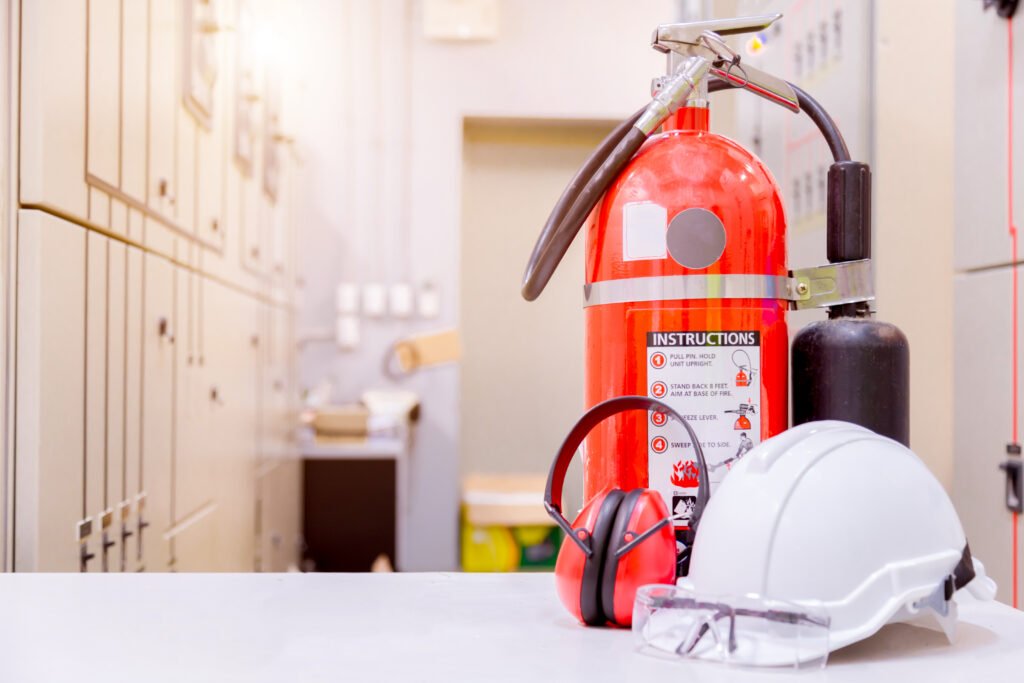
What Is Fire Safety Solutions?
Fire safety solutions cover everything that keeps a building’s fire protection working and compliant, from detection and alarm systems through to fire doors, fire stopping, and suppression equipment. What sets MCT’s approach apart is that we run the whole lifecycle as one service rather than splitting it across different suppliers: we assess the risk, agree what needs remediating, carry out the installation or repair work, test and certify it, then maintain it going forward.
That matters because a fire risk assessment on its own doesn’t fix anything. A lot of fire safety providers stop at the report. We carry out the assessment, then complete the remedial work ourselves, so findings turn into finished, certified work rather than a document that sits unactioned.

What We Commonly Find During a Fire Risk Assessment
Fire doors propped open
This is one of the most common issues we come across, usually in corridors and stairwells where staff prop doors open for convenience or deliveries. A fire door only works if it’s closed, so a propped door removes the compartmentation it’s meant to provide. Where we find this, we look at why it’s happening, whether it’s a ventilation issue, a delivery route, or simple habit, and recommend a fix that solves the underlying reason rather than just telling staff to stop.
Damaged or breached fire stopping
Fire stopping around cable and pipe penetrations gets breached most often when other contractors, electricians, IT installers, plumbers, work through walls and floors and don’t make good afterwards. These breaches are easy to miss because they’re usually hidden above ceilings or inside risers. We identify them during the assessment and carry out the remedial fire stopping ourselves rather than handing it to a third party.
Alarm testing and documentation gaps
We regularly find fire alarm systems that are installed and working but not tested to the schedule they should be, or where the test records don’t match what’s actually been done on site. Older equipment also tends to generate more false alarms, which leads some buildings to disconnect or ignore parts of the system altogether, which is worse than having no system at all.
Compartmentation problems in ceiling voids and risers
Compartmentation failures are often invisible from floor level. Service penetrations in ceiling voids, gaps around risers, and poorly sealed builder’s work openings all weaken a building’s ability to contain a fire. These need a proper inspection above the ceiling line, not just a walk through, which is why our assessments include checking these areas directly rather than assuming they’re fine.

From Assessment to Remediation: How Our Fire Safety Service Works
- Identify. We inspect the building’s existing fire safety measures, including alarm systems, escape routes, fire doors, and compartmentation, and record what we find.
- Prioritise. We classify findings by risk, so the most urgent issues are flagged first rather than buried in a long list.
- Scope. We translate the findings into a defined scope of remedial work, with pricing based on what the building actually needs.
- Complete. Our own teams carry out the detection, suppression, or passive fire work, coordinating around occupied buildings and working hours where needed.
- Verify. We test completed work and issue the certification and documentation required for ongoing compliance.
- Maintain. We set a maintenance schedule for testing and servicing, with reporting on completed work and anything still outstanding.
What Determines the Cost of Fire Safety Work
Fire safety costs vary too much between buildings for a fixed price to mean much, but the main factors are building size, number of floors, occupancy type, the condition of any existing systems, how many devices or fire doors are involved, and how complex the compartmentation is. We price work after reviewing the building itself, not from a generic rate card, so the quote reflects what that specific site actually needs.
Fire Safety Solutions by Sector
Fire Safety for Offices
Office buildings need fire detection and escape routes that stay compliant without disrupting the working day. We schedule testing, servicing, and remedial works around office hours so daily operations carry on undisturbed.
Fire Safety for Industrial Sites
Industrial sites carry more fire risk from plant, storage, and processes, so suppression systems and passive fire measures matter more here. We coordinate installation and testing around production schedules to keep downtime as low as possible.
Fire Safety for Care Homes and Occupied Care Environments
Care environments are occupied around the clock by people who may need help evacuating, which changes how fire safety work has to be carried out. Fire doors, compartmentation, and alarm testing all matter more in a care setting than almost anywhere else, because residents can't always self-evacuate and staff need systems they can trust without question. Work has to be planned around care routines, medication times, and resident movement rather than scheduled purely for contractor convenience. This is the sector our work with Towerview Care sits in, and it shapes how we approach every care environment we work in.
Fire Safety for Retail
Retail sites need fire safety systems that keep working through trading hours without affecting customers or stock. We coordinate testing and repairs around opening times so shop floors and stockrooms stay compliant.
Selected Clients and Sectors
Towerview Care
Challenge: fire safety work in occupied care settings where residents cannot always evacuate unaided.
Scope: fire door checks, alarm testing, and compartmentation reviews.
Approach: work planned around care routines and staff availability rather than a fixed contractor schedule.
Roger Bullivant
Challenge: fire safety requirements on active construction and industrial sites where conditions change as work progresses.
Scope: fire safety measures suited to a live construction environment.
M Core / LCP UK
Challenge: consistent fire safety standards across multiple managed commercial sites.
Scope: detection, suppression, and passive fire safety as part of ongoing building upkeep.
Hortons
Scope: fire safety support delivered as part of a wider facilities management relationship.
Where We Provide Fire Safety Solutions
MCT Facilities Group is based in Burton-on-Trent, with fire safety solutions delivered across the Midlands and North West England, including dedicated coverage in the following areas:
| Region | Core City | Surrounding Areas Covered |
|---|---|---|
| West Midlands | Birmingham | Solihull, Coventry, Wolverhampton, Walsall, Dudley |
| East Midlands | Nottingham | Derby, Mansfield, Beeston, Arnold |
| North West England | Manchester | Salford, Stockport, Bolton, Oldham |
Clients across Birmingham, Nottingham, and Manchester choose local fire safety support because our teams are close enough to carry out assessments, remedial work, and testing without long lead times between visits.
Our Fire Safety Solutions
We split our fire safety solutions into three areas, delivered by our own teams so the people who assess a building are the ones doing the work.

Detection & Warning Systems
Detection and warning systems are what alert people to a fire early enough to get out safely, installed and maintained with reference to BS 5839. This includes:
- Fire alarm installation and upgrades
- Smoke and heat detector installation
- Alarm system testing and servicing
- Emergency lighting linked to fire alarm systems, in line with BS 5266
- Fault finding and reactive repairs
- Compliance documentation and certification

Suppression Systems
Suppression systems are designed to control or put out a fire once it starts, maintained in line with BS 5306 for extinguishing equipment. This includes:
- Fire extinguisher supply and servicing
- Sprinkler system installation and maintenance
- Fire suppression system testing
- Kitchen and specialist suppression systems
- Reactive repairs and system upgrades

Passive Fire Safety
Passive fire safety covers the parts of a building designed to contain a fire and protect escape routes without needing to activate. This includes:
- Fire door installation, repair, and inspection
- Fire stopping and compartmentation
- Fire rated glazing and partitions
- Cavity barriers
- Remedial works following inspection findings
What Makes MCT's Approach Different
- Findings turn into finished work. Our fire risk assessments lead directly into remedial work carried out by our own teams, not a report that gets filed and forgotten.
- One contractor across the whole lifecycle. Assessment, installation, testing, certification, and maintenance all sit with the same provider, so nothing gets lost between suppliers.
- Work carried out against the standards that apply. Alarm systems, emergency lighting, and extinguishing equipment are installed and maintained with reference to BS 5839, BS 5266, and BS 5306.
- Experience in occupied buildings. Our work in care environments like Towerview Care shapes how we plan every job in an occupied building, not just care settings.
- Contract takeover without a compliance gap. We can review an existing fire safety arrangement and take it over, including current maintenance schedules and documentation.
- Accredited and vetted. CHAS accreditation as a contractor and Constructionline membership, with electrical fire system work supported by our NICEIC approved contractor status.
Protect Your Facility from Fire Hazards
End-to-End Fire Safety Solutions
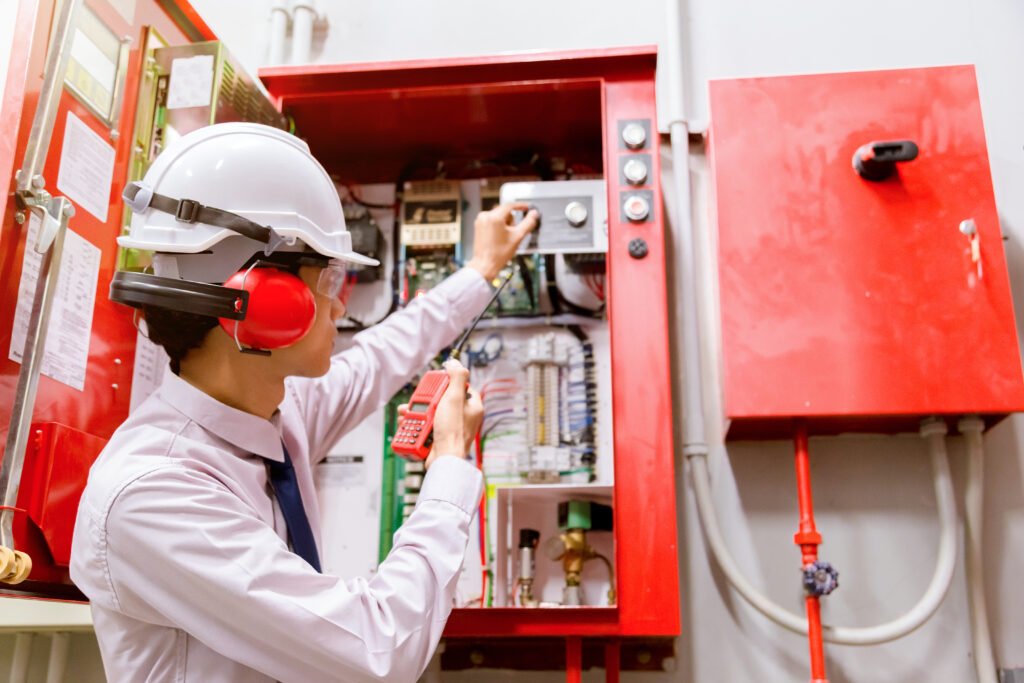
Detection & Warning Systems
Early alerts to prevent fire escalation and protect lives and property.
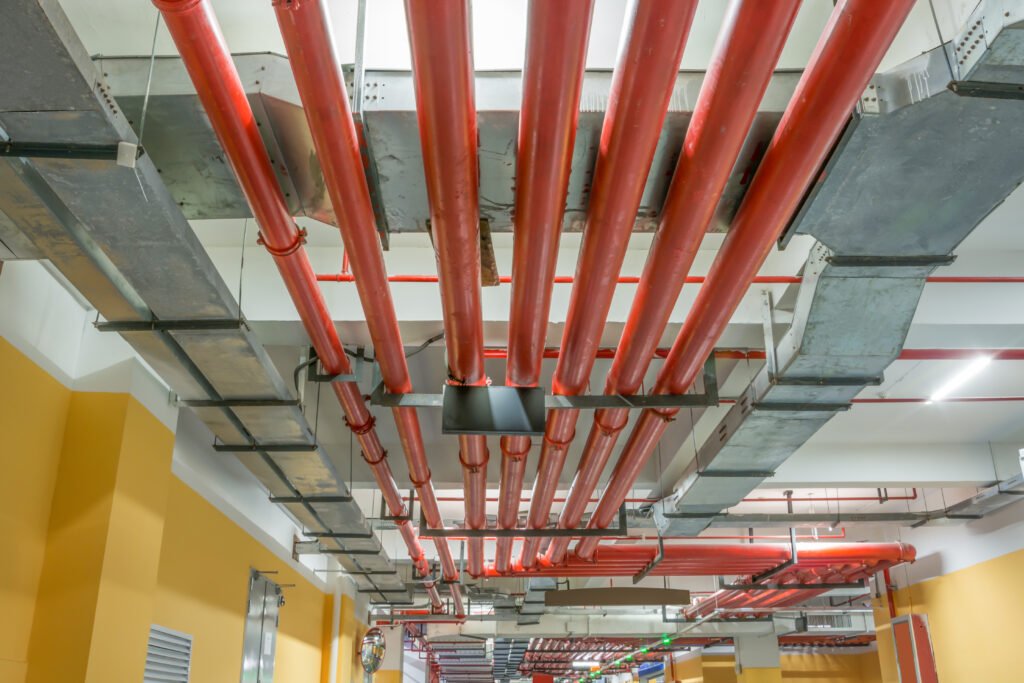
Suppression Systems
Rapid, reliable fire control solutions designed to protect lives and property.
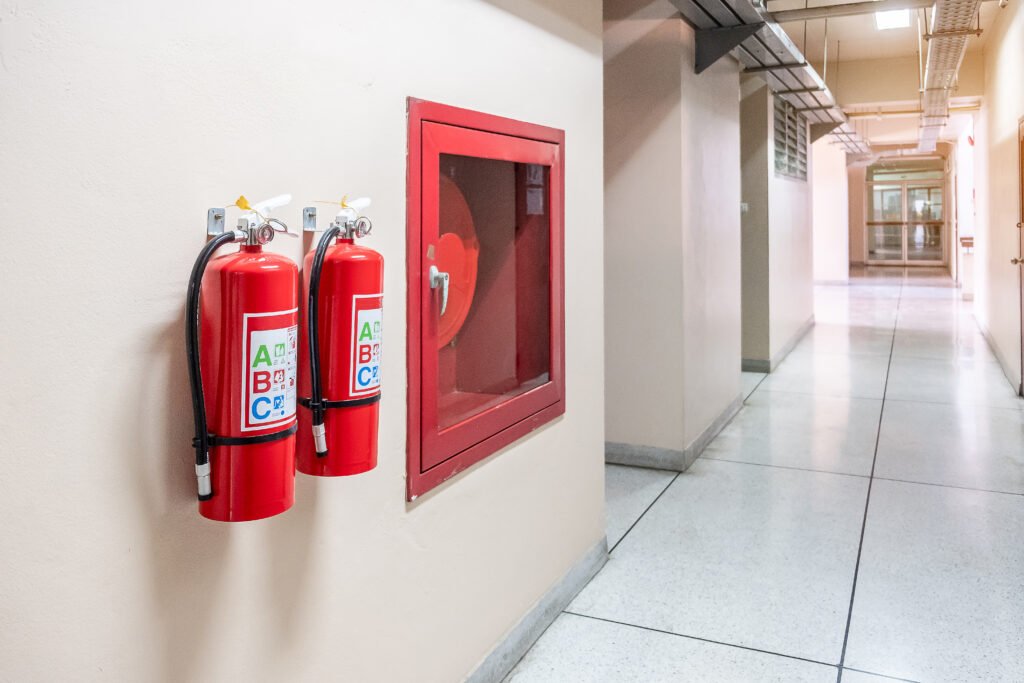
Passive Fire Safety
Have a Question?
Got a question? Our team is ready to provide the answers and guidance you need.
Active fire safety includes systems that respond to a fire, such as alarms, detectors, and suppression systems. Passive fire safety includes the building elements that contain a fire without needing to activate, such as fire doors, fire stopping, and compartmentation. Most buildings need both working together.
Yes. We review the existing arrangement, including current maintenance schedules and compliance documentation, and take over the contract without a gap in cover.
You should receive test certificates, inspection records, and any compliance documentation relevant to the work carried out. We provide this as standard so it’s ready if a building is ever inspected.
Yes. Based in Burton-on-Trent, we provide fire safety solutions across the West Midlands, East Midlands, and North West England, with dedicated coverage in Birmingham, Nottingham, and Manchester.
Fire safety solutions include a fire risk assessment, detection and warning systems, suppression systems, and passive fire safety such as fire doors and fire stopping. At MCT, we run assessment through to maintenance as one connected service so findings get remediated rather than just documented.
A fire risk assessment checks a building’s existing fire safety measures against current requirements, including alarm systems, escape routes, fire doors, and compartmentation above and below ceiling level. It identifies gaps, prioritises them by risk, and sets out what needs to be done.
Testing frequency depends on the system and the building, but alarm systems, emergency lighting, and extinguishers all need regular testing under the standards that apply to them. We agree a testing schedule as part of the maintenance plan so nothing gets missed between visits.
We record the defect, explain the risk it represents, and carry out the remedial work ourselves once it’s agreed, rather than passing the finding to a separate contractor. This is part of why we run assessment and remediation as one service.
Our Customer Stories

accreditations
Our accreditations reflect the care, quality, and professionalism behind everything we do.